2025 Year in Review
It’s been a year since the last time I posted here so figured that a brief “year in review” article is due. TL/DR: 2025 was a year of a gradual transition into academia, and I am excited to share this news with you all!
Spacecraft Contamination Class at USC
2025 started with my PIC-C team supporting several projects, including JHU/APL Dragonfly, which will fly a rotorcraft on Saturn’s moon Titan. At the same time, I continued part-time lecturing at the Department of Astronautical Engineering at University of Southern California (USC. I began teaching there in 2020 by first creating a class on scientific computing (which turned into a programming textbook), and then later expanded my teaching portfolio with a class on computational plasma dynamics based on the Plasma Simulations by Example book. In Spring 2025 I created and taught a new tech elective course, ASTE-599, Contamination Control of Space Systems and Planetary Protection. The objective of that class was to introduce USC astronautical engineering students to the fascinating discipline of spacecraft contamination control. As many of you know, my career began by developing codes for electric (plasma) propulsion plume-spacecraft interactions, but subsequently transitioned into modeling molecular and particulate contaminant transport.
Topics that we got to cover during the 15 weeks making up the Spring semester are listed below:
Weekly Schedule
| Class | Topic |
|---|---|
| 1 | Introduction to Contamination Control: This class introduced spacecraft contamination control by going over examples of the impact of molecular and particulate contamination. Homework involved a short student’s biography (so I can learn who is who), and then reading and summarizing three papers on contamination lessons learned on MSX, JWST, and EUVE. |
| 2 | Spacecraft Materials: We started this lesson by reviewing common spacecraft materials, starting with metals. We then learned about petroleum refining and chain polymerization, and reviewed common polymers including polyimide foams, and thin films such as Kapton. We next covered composites and glass. Lubricants and sealants, including silicon were also talked about. Literature review included various papers talking about the effect of the space environment on common spacecraft materials. Homework involved calculating concentration of unpolymerized monomer to trimers in a block of plastic exposed to vacuum, and calculating their impact on the vacuum pressure assuming they are able to outgas. |
| 3 | Contamination control plans: This lesson started with reviews of some publicly-accessible contamination control plans I was able to find. Here we also went over various commonly utilized standards. We then went over the impact of molecular films on signal transmission, i.e. Beer-Lambert law, absorptance, etc. We also introduced (now legacy) molecular contamination levels such as A, A/10, etc. For homework, I provided students with emission spectra of three different reference stars along with the absorptance spectrum of some hypothetical contaminant. They were asked to calculate how the spectrum is affected given several different thickness of molecular film. |
| 4 | Particulates and Cleanrooms: After a short review of particulates, we started talking about cleanrooms. This included introducing ISO classes, types of flow orientation, and the use of HEPA filter walls. We went over the different facilities at NASA Goddard including some movable clean room tents. We then watched videos on cleanroom gowning. We continued the lesson with cleaning and mopping, and also with models for estimating particulate fallout. Here we also introduced models for particulate detachment, particulate aspect ratio as a function of size, particle size concentration, Stoke’s Law, and BRDF. Homework involved computing surface percent area coverage due to fall out in different ISO level cleanrooms. |
| 5 | Contamination quantification: We covered different methods and techniques for measuring contamination levels. This included NVR rinses, use of microbalances, particulate tapelifts, FTIR spectrometers, and GC-MS. We also went over the associated standards and NASA procedures. Literature review then introduced various real-world data of measurements from wipers, tape lifts, NVR, glove contact, etc. Homework involved translating molecular cleanliness levels to molecular film thickness and also computing surface deposition thickness in different clean environments after a prescribed time interval. |
| 6 | Mechanical Testing and Impact on Particles: We started by watching videos of spacecraft vibrational, shock, and acoustic testing. We also watched videos illustrating how acoustic pressure waves can dislodge surface particulates. We covered topics such as natural frequency and resonance, and saw how the expected vibrational envelope is available in launch vehicle payload planners guides. We then saw how bagging is used to provide protection during testing and also transportation. The second half of class discussed particle removal due to vibrations. Here we talked about the commonly used Klavins and Lee model. Homework assignment involved calculating remaining surface area coverage on surfaces exposed to different vibrational loads. |
| 7 | Thermal Vacuum Testing and Bakeouts: We started with some vacuum topics, such as Knudsen number, throughput and conductance, Clausing factor, and Fick’s law of diffusion. We then introduced vacuum chambers, their wall material, and virtual leaks possibly arising from incorrect edge welds. We then talked about different pump types, and also diagnostic equipment including ion gauges, RGAs, thermocouples, QCMs, and coldfingers. We covered leak checking and the determination of effective pump area. We also had few slides on different heater types and also went over data from MMS TVAC that I supported some 10 years ago. We also watched videos of thermal vacuum testing and TVAC chamber certification. One video was by Denisse Aranda from Blue Origin, with whom I have worked in the past in support of a project ASTE PhD student Elana Helou was working on. For homework, I provided students with the QCM data taken in support of that research project and had them analyze it using Excel. |
| 8 | Planetary protection: The class started with a biology 101, where we went over eukaryotes and prokaryotes, and bacteria vs. archaea. We then watched a video on endospore formation. Next we introduced COSPAR planetary protection categories as well as the Coleman-Sagan equation. Then I had another video describing typical work load of a planetary protection engineer. Literature review included various papers on testing spore viability including after exposure to the space environment or high velocity impact, as well as papers on sampling of biome in spacecraft processing clean rooms, and sterilization technologies. Then I had more videos on sampling of bioburden and growing bacterial assays. Homework was a reading assignment of three papers on space microbiology, clean room microbiome, and a review of sterilization technologies. |
| 9 | Purge and venting: Purge related topics such as purge carts, flow restrictors and filters, flow rates, time off purge, chamber repressurization were discussed. Next we talked about venting and how MLI vents could be source of particulates. Originally a contact from Blue Origin was supposed to speak but had to cancel at the last minute due to a schedule conflict, which led to a shorter class. Homework involved deriving the commonly utilized 0D mass infiltration equation of Scialdone by starting from the continuity equation and then using it to visualize internal contaminant concentration at different purge flow rates. |
| 10 | Water and Ice: We started with our first speaker, another contam engineer from Blue Origin, who presented in lieu of the originally scheduled speaker. She talked about her typical responsibilities and also how she ended up with this job. We then started discussing issues related to water. We saw that water is only a concern on cryogenic missions, such as those measuring in IR. We then watched some videos discussing different types of water ice. Vapor pressure models, including the one of Murphy and Koop that I used on JWST were introduced. Past observations of water in vacuum chambers, and also impact on missions such as JWST and Euclid were introduced. We then went over some papers discussing water in the solar system. Homework involved numerically integrating Clausius–Clapeyron equation with the latent heat of sublimation model given in Murphy and Koop, and comparing the resulting vapor pressure curve to their simple 4 term fit. |
| 11 | Regolith: I started with some additional particulate sources skipped over previously, including launch vehicle acoustic blankets and frangibolts. We then went over surface composition of different planets, moons, and asteroids. Literature review included a paper on observation of spacesuits worn by Apollo astronauts as well as transcripts of their observations of dust impact. Then we went over multiple papers talking about different regolith simulants and studies of its adhesion. Here I also introduced USC Prof. Joe Wang’s regolith charging experiment as well as the work that was done more recently by one of his Ph.D. students. Lofting of regolith by retrograde thruster plumes was also covered, as was the payload carried on the Firefly Blue Ghost moon lander, which appropriately happened to touch down just a week or two prior to the lecture. This included the electrostatic dust shield. We also talked briefly about in-situ resource utilization. I then had more papers to go over focusing on Mars observations, including evidence of dust levitation due to the downwash of the Ingenuity helicopter. Finally, we talked about some testing being done in support of Dragonfly. Homework involved calculating magnitude of several different forces relevant to particle surface adhesion such as capillary, van der Walls, electrostatic, and gravity. |
| 12 | Contaminant Modeling: Objective of this class was to introduce modeling of contaminant mass transport. We started with the use of radiation-heat transport codes to compute view factors. We then went over particle-based simulations, which included the concept of thermalization. I demonstrated particle-based simulations using an interactive Javascript code running in a web browser. We then went over model preparation including reduction of CAD complexity, meshing, grouping, and data visualization. Homework was an Excel-based particle-integrator. |
| 13 | Thruster Plumes: We covered different kinds of thrusters including biprop, monoprops, and various plasma thrusters. For each, we identified possible contamination sources, such as droplet generation and catalyst bed failure in monoprops, sputtering in gridded ion thrusters, backflow, and charge exchange ions. We covered toxicity of hydrazine and attempts to produce novel “green” alternatives. Homework involved computing angular mass concentration of plume constituents using an analytical model of Woronowicz. |
| 14 | Electrostatic Return, Charging, and Orbital Debris: We started with photoionization, Lorentz force, and the solution to Gauss’ law for a uniformly charged sphere. Floating potential, plasma sheath, and the Debye length were also introduced. Simulation codes for charging were introduced next. We also talked about backscatter and radiation effects. We then discussed micrometeroid impacts and tools used to characterize the orbital debris environment and its impact on spacecraft. We then had videos on asteroid shields and experimental and numerical observation of projectile fragmentation and Whipple shield spallation. Homework involved various calculations such as the Debye length at different altitudes, the possibility of electrostatic return for a charged dust flake, calculation of solar radiation pressure, and a calculation of shield thickness to prevent penetration and spallation using the Rockwell equation. |
| 15 | Diffusion: The final lesson was on the mathematics of the diffusion equation. Here we followed Crank to obtain an analytical solution for a 1D problem of an initially finite slab of uniform contaminant concentration diffusing into a finite-sized vessel. Other topics included non-Fickian (i.e. anomalous) diffusion such as Knudsen diffusion, diffusion coefficient, Arrhenius equation, mobility, interatomic potential, isotherms, and Langmuir flux. We then went over a numerical solution to the 2D unsteady diffusion equation using the FTCS method. Homework involved implementing the FTCS solution in 1D using Excel. |
Grading and Assignments
Grading consisted of weekly homework assignments, 5 take home multiple-choice quizzes covering the prior 2 or 3 lessons, 4 “mini projects”, and a “final”. The final consisted of a longer comprehensive take home quiz and an in-class presentation of project 4. The miniprojects were meant to simulate work responsibilities of a contamination engineer and generally involved brainstorming. They were graded mainly on effort. Students were asked to do the following:
- Miniproject 1: This project asked students to develop a contamination budget for a hypothetical instrument to be integrated as part of a sensor suite on a larger spacecraft. I provided students with some assumptions for the I&T flow, i.e. delivery with a certain cleanliness level, integration into the instrument suite in an ISO-so-and-so cleanroom over so many days, bagged during off hours, subsequent shipment for integration onto the spacecraft, mechanical and vacuum chamber pre-flight testing, shipment to launch site processing, certain outgassing in space, etc. The students were to come up with a prediction for molecular and particulate loading until end of life.
- Miniproject 2: For this project I provided students with actual particulate tape lift and ASTM-E1559 molecular outgassing log files. They were asked to analyze these files, by computing particulate cleanliness levels from the tape lifts, and outgassing rates and decay power law fit for the outgassing data set. That data set also contained data for a QCM thermogravimetric analysis (QTGA), which the students were also to analyze. This involved computing numerical derivatives and making plots.
- Miniproject 3: This project allowed students to develop numerical simulation skills. I provided them with a STEP file for a simple generic satellite I quickly drew up. They then generated the surface mesh by following provided instructions. They also had to organize surface triangles into logical groups to be used to assign material properties. The mesh was then exported and a simulation input file was generated. Students then ran the simulation of molecular outgassing and deposition onto a spacecraft component using the freeware version of my CTSP program. Produced results had to be visualized using Paraview.
- Miniproject 4: This project asked students to brainstorm a mission to Saturn’s moon Enceladus. The mission was to consist of an orbital phase and a subsequent surface operation that lasted at least a month. There were two deliverables. The first was a write up in which students were to identify their mission concept of operations and a sketch of the satellite. They were also to identify what instruments they were proposing and brainstorm possible contamination hazards and to propose allowable contamination limits. The second deliverable was a draft version of a contamination control plan. The idea was to follow the layout per ASTM-E1548. Students were to outline protocols to be implemented to maintain cleanliness. Among other things, I was looking at whether students also included planetary protection in their discussion, given that Enceladus is one of the potentially habitable solar system bodies. Presentation on this effort was then delivered as part of the final exam grade.
Material Availability
The original plan was to make this class a regular addition to the USC ASTE syllabus that will be offered in alternate springs from ASTE-546, “Computational Plasma Dynamics” with ASTE-404 “Computational Programming and Numerical Methods” offered in the Fall. However, as you will see below, this ended up being my last quarter teaching at USC! I am hoping to eventually offer this material again, but in the meantime, message me if you are interested in lecture slides.
ASPEN at IEPC 2025
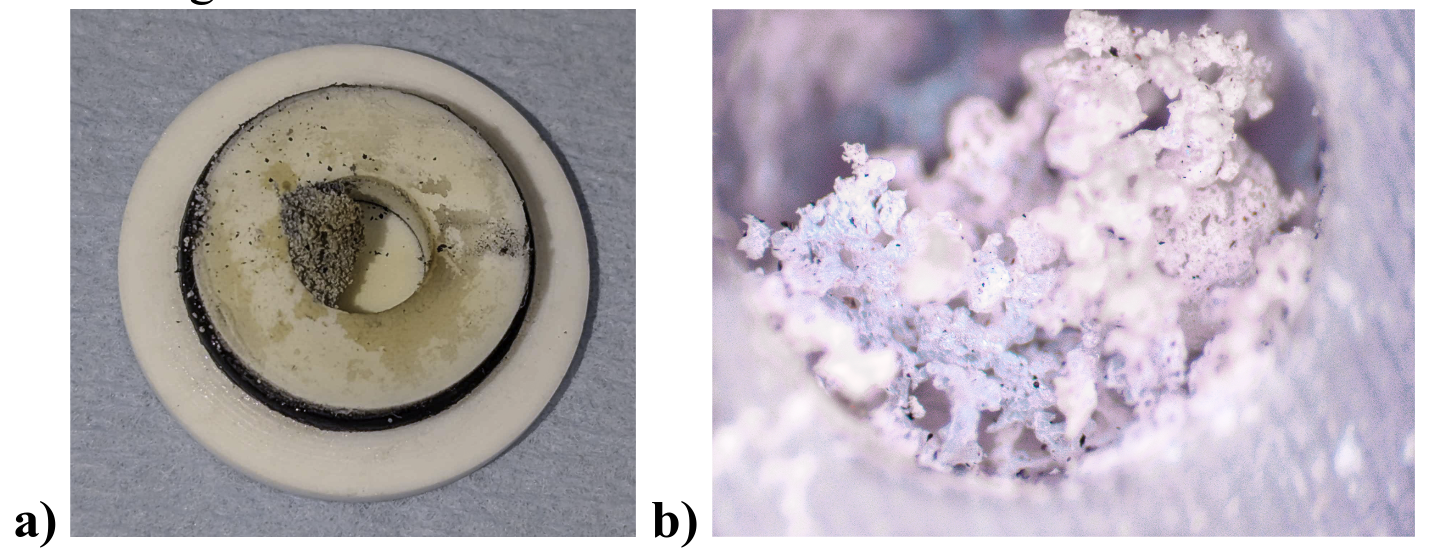
During this semester, I also continued advising the undergraduate EP club ASPEN in their effort to develop a compact low-power plasma thruster for Cubesat deorbiting. In September, eight ASPEN members traveled to London to attend the 2025 IEPC, with their papers archived here. The most notable finding was that the utilized Adamantane propellant tends to crystalize, at least as used in their “Asteria” thruster. The resulting crystals, seen in Figure 1, were not likely to sublimate, leading to propellant utilization inefficiency and also a general introduction of contaminants. I was not able to make it to IEPC, but from what I heard, the conference was very successful.
Move to Cal Poly
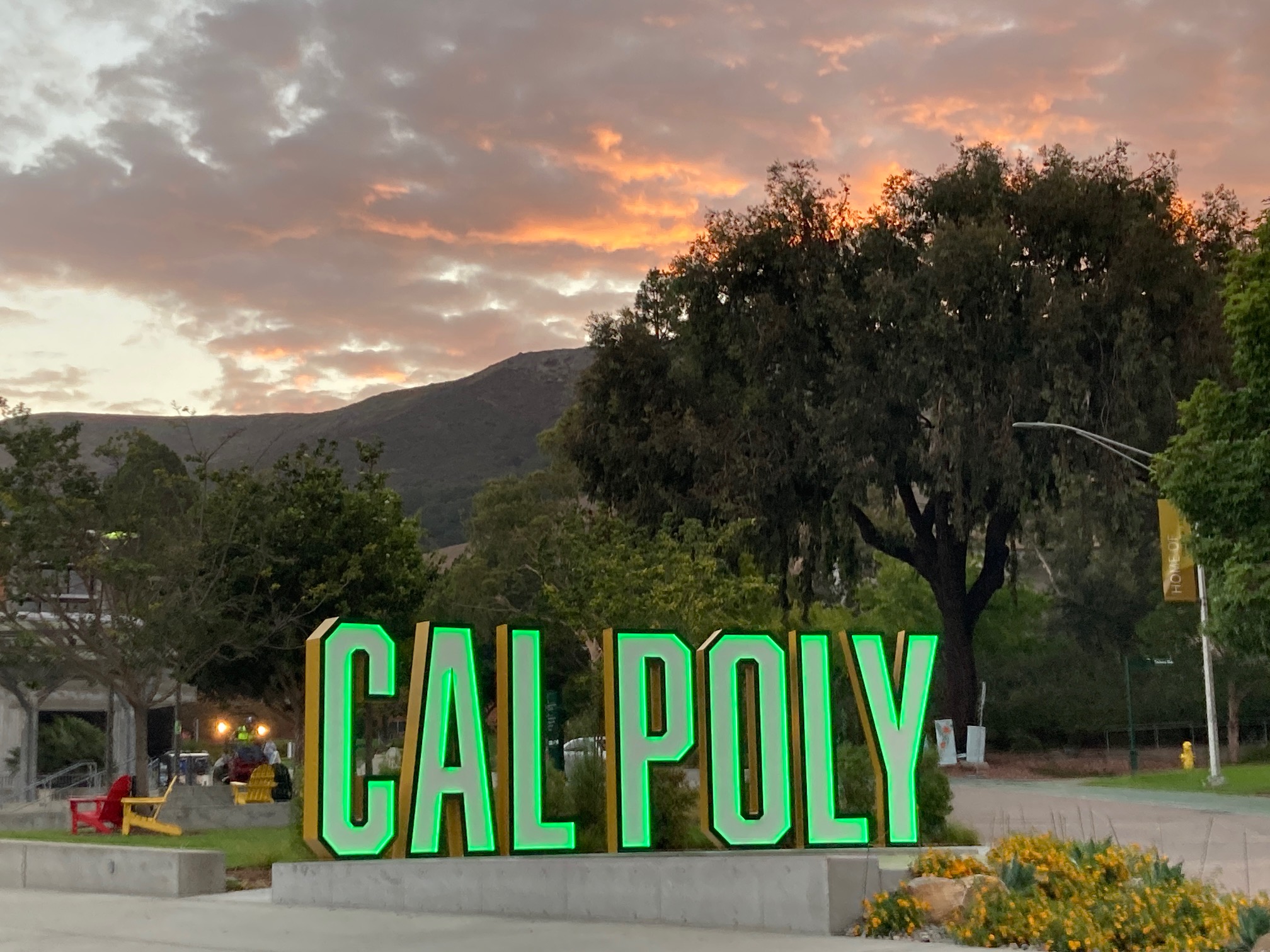
The reason for Spring 2025 being my last time teaching at USC and also for not attending IEPC 2025 was that in March I was offered an Assistant Professor job at the Aerospace Engineering department at Cal Poly, San Luis Obispo! Through the many years of being “academia-adjacent”, first by offering plasma simulation classes through PIC-C, and then by teaching part-time at USC, I realized that I enjoy teaching and would not mind doing it full time. At the same time, I knew that I was not particularly interested in going to a research-focused (R1) university. Getting tenure at an R1 involves three things: 1) bringing in a ton of money from research grants, 2) publishing many papers, and 3) graduating (or least getting close to) Ph.D. students. The life of a new tenure-track R1 academic thus involves endless hours of proposal writing. But even ignoring the money side of the tenure process, I find that university research tends to be, well, rather academic. Working with ASPEN, I realized that I much more prefer working on practical engineering problems that are perhaps not quite advanced enough to justify a Ph.D. dissertation, but have the prospect of delivering an immediate meaningful impact to the discipline. I was notionally considering “going on the market”, but didn’t pull the trigger until, by a chance, a job advert for a position at Cal Poly showed up on my LinkedIn feed in November 2024, just a few weeks prior to the deadline. This job seemed like a perfect fit, given Cal Poly’s focus on hands on undergraduate education. I figured I got nothing to lose, so I spent the following week working on the application, following the advice from the excellent The Professor Is In book. The subsequent process involved a months-long period of silence during which I figured that the hiring committee has settled on a different set of candidates. But then in February 2025 I received an invitation to a campus visit, and the verbal offer a month later. I was very much excited to receive that phone call!
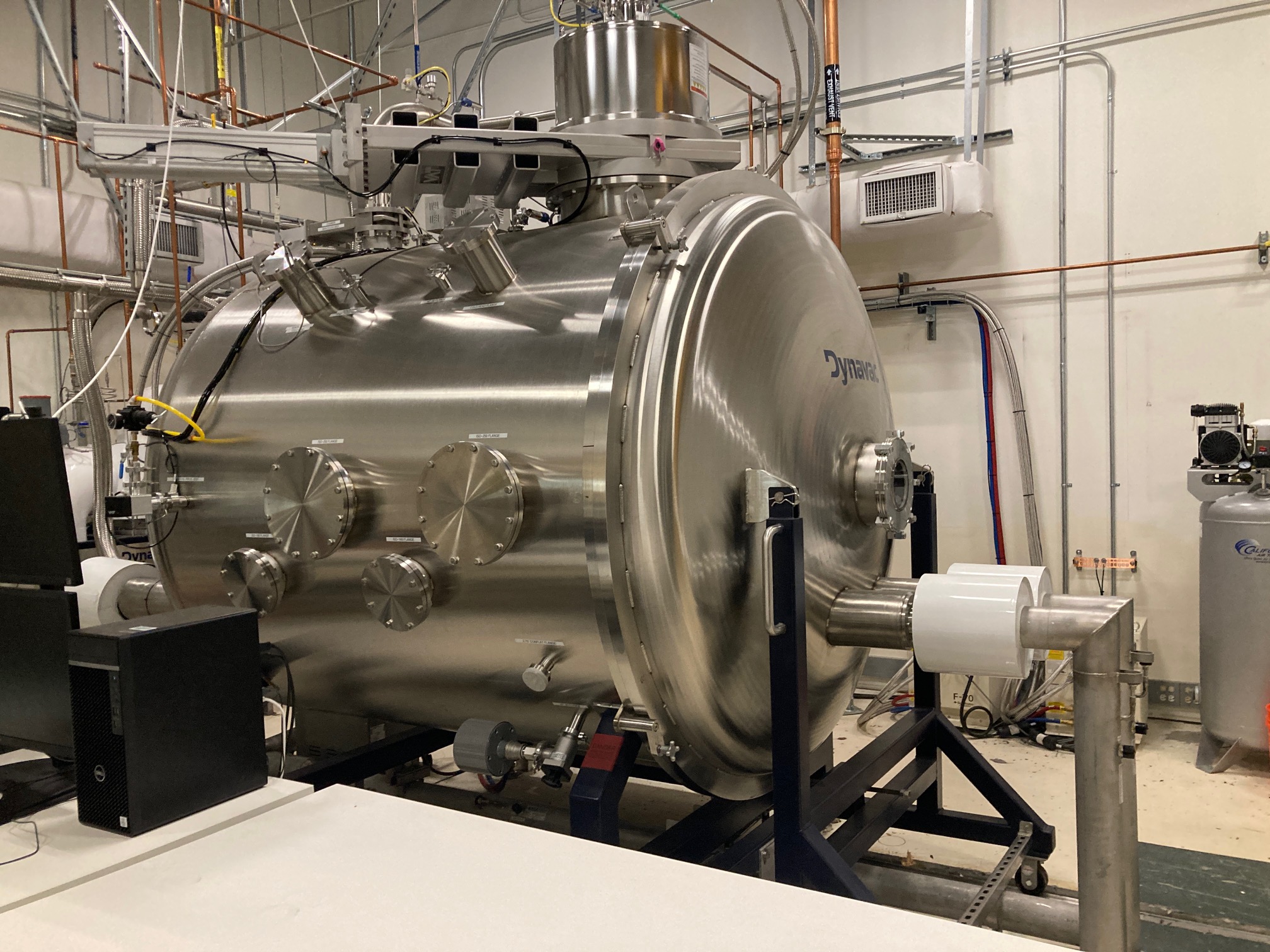
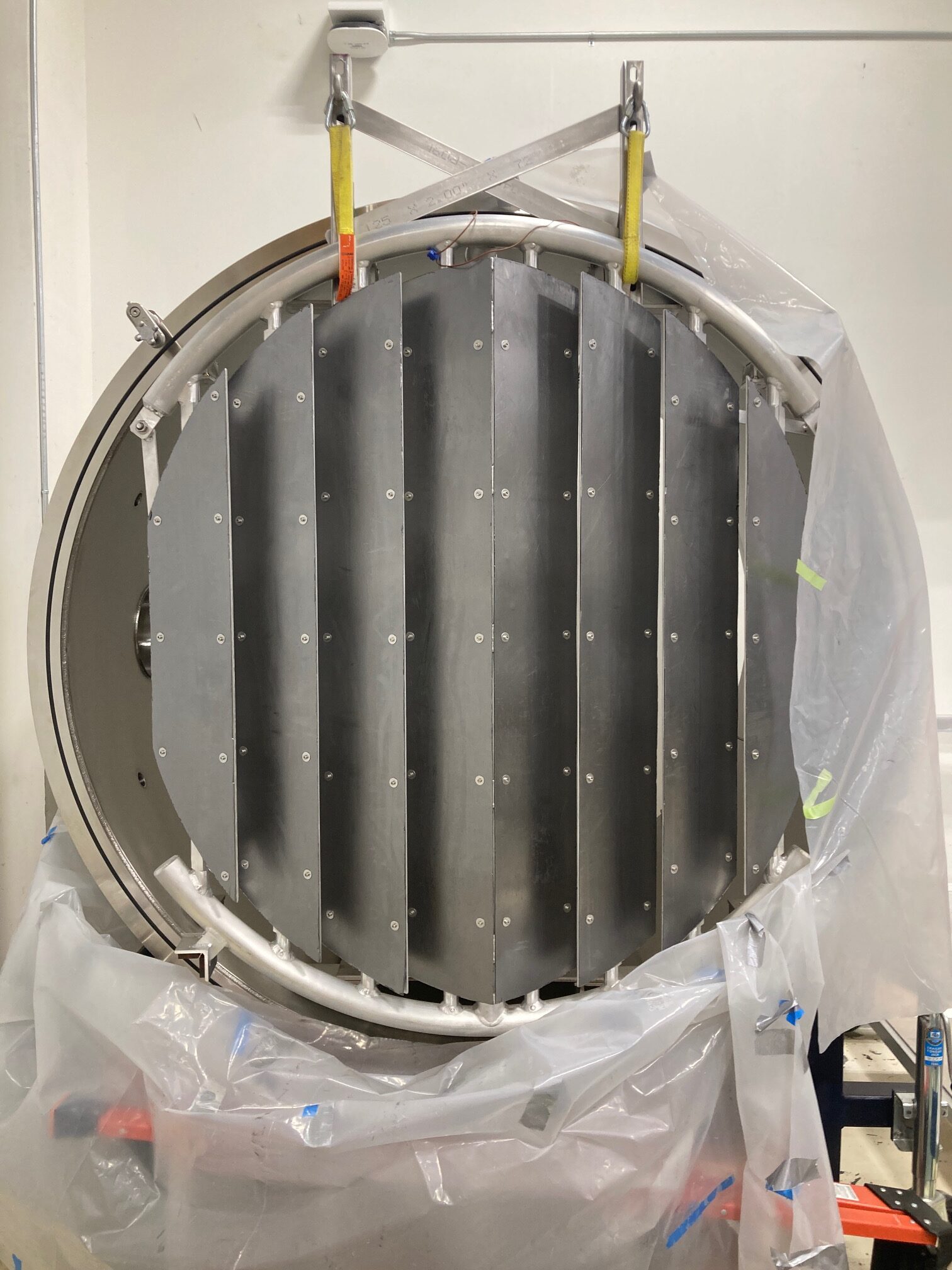
At Cal Poly, my goals are to establish a widely-known experimental and numerical program focusing on plasma propulsion, contamination transport, lunar regolith adhesion, and plasma-surface interactions. The experimental research will be conducted primarily in a new Dynavac 6×10 foot vacuum chamber that can be switched between a thermal vacuum and an EP configuration. This chamber can be seen in Figure 3.
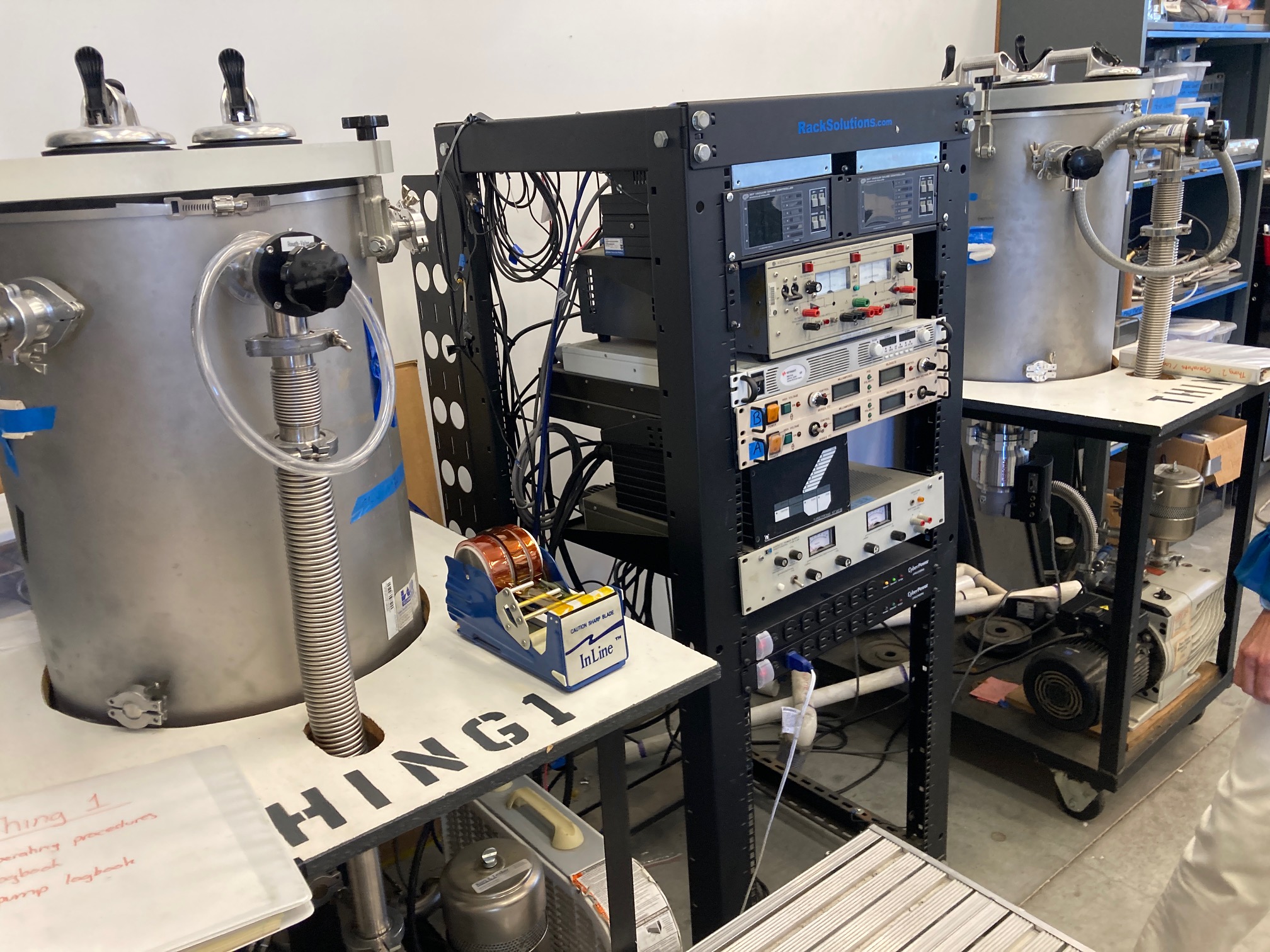
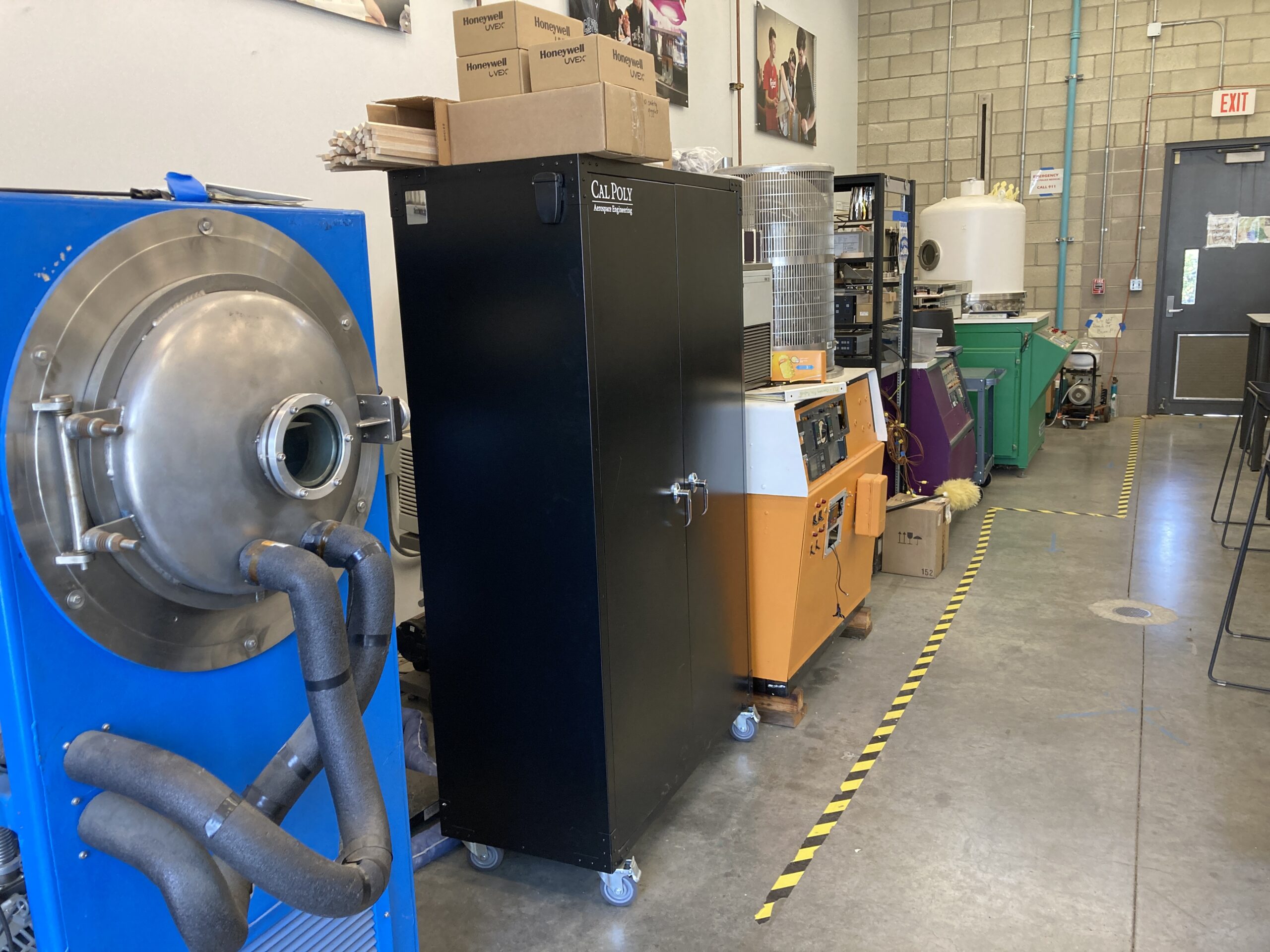
The Aero department also owns a multitude of smaller vacuum chambers that are primarily utilized by a space environments undergraduate laboratory and graduate students working on their masters theses. These chambers can be seen in Figure 4, and include a smaller TVAC chamber, as well as an RF-driven atomic oxygen chamber, and various general purpose vessels.
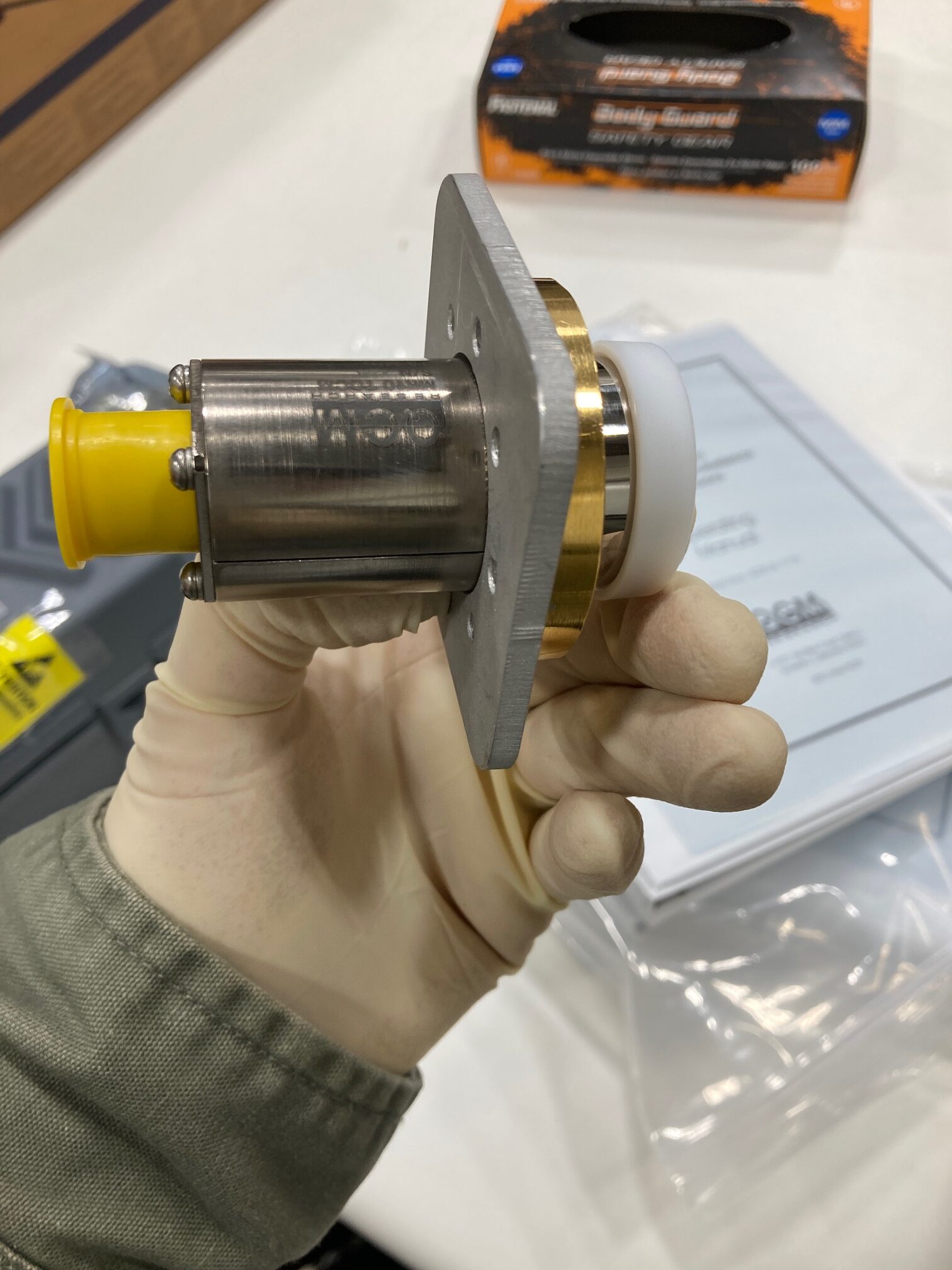
These facilities will be used to conduct a variety of plasma and rarefied gas dynamics related research, giving students practical “learn by doing” experience with electric propulsion, contamination control, and material processing. Reach out if Cal Poly facilities could be of use to your firm or if there are opportunities to collaborate. By a truly lucky chance, we were loaned two QCM Research Mark 10 TQCMs, and 3 Mark 18 CQCMs. QCMs are devices used to measure the amount of condensable molecular contaminants. TQCMs contain an internal heating and cooling element used to control the crystal sensor temperature. Temperature of CQCMs is instead regulated by a baseplate they are attached to. CQCMs are often used with LN2-chilled plates to capture water vapor.
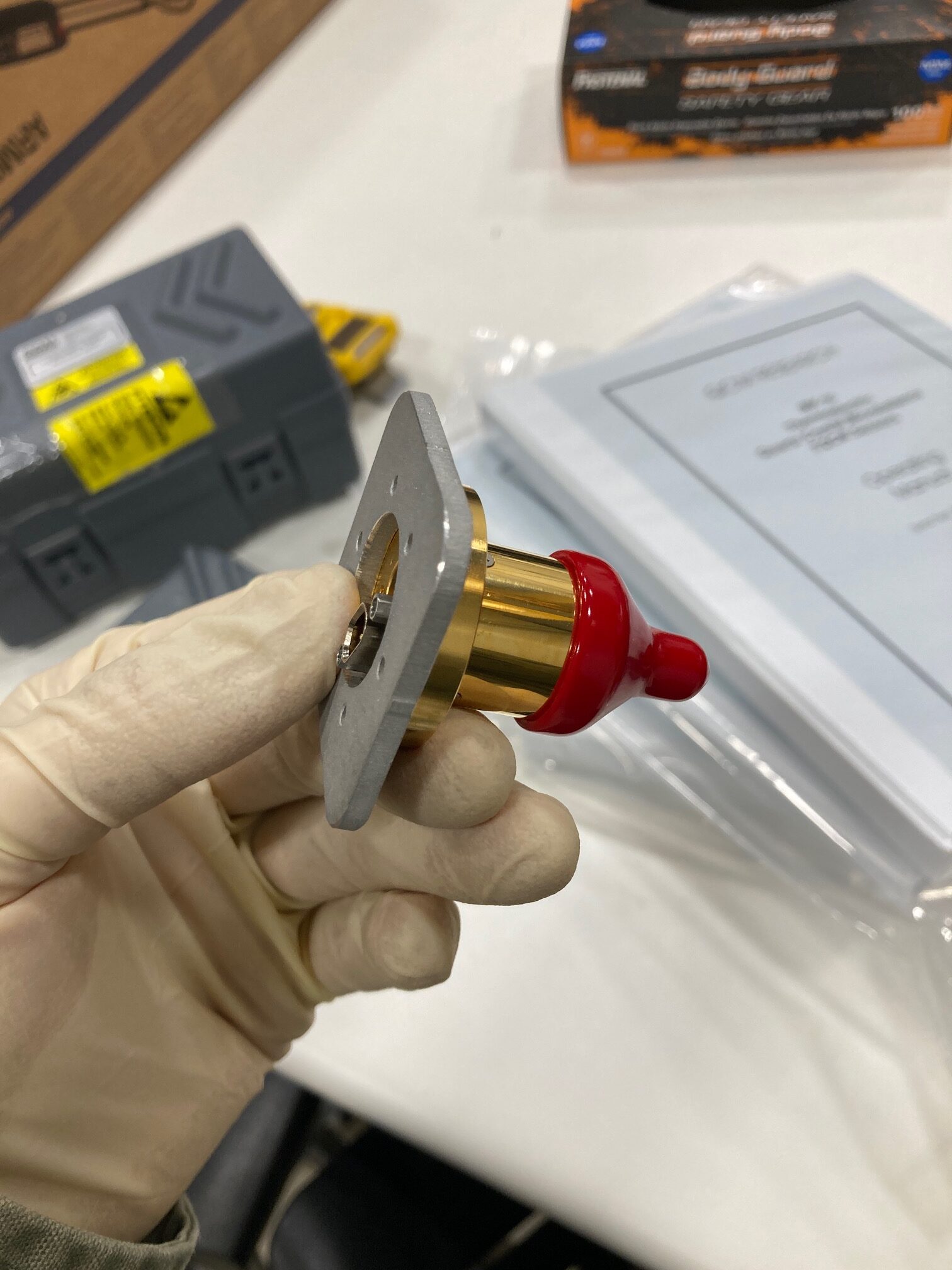
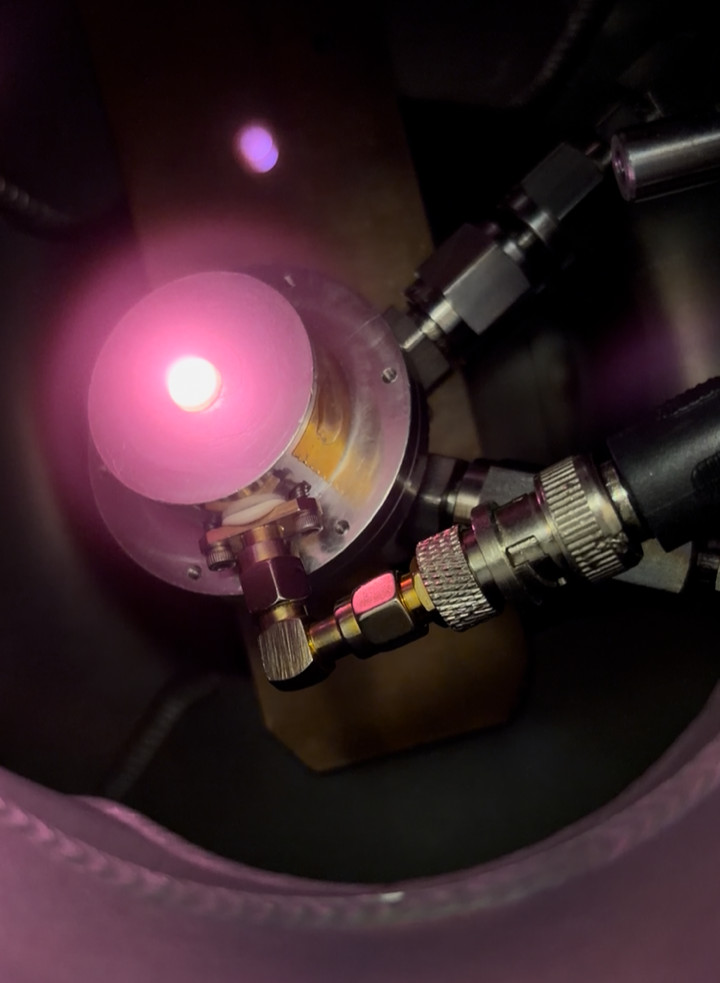
I also started working with Cal Poly students on plasma propulsion topics. A new “independent research activity” (IRA, a research-focused student club), called Poly Electric Propulsion and Plasma Research (PEPPR) was formed. Cal Poly used to have an active EP program under former Profs. Amelia Greig and Kristina Jameson (Silva). PEPPR students were successful in operating Dr. Greig’s RF “pocket rocket” thruster on Argon, see Figure 6. More details about this device is available in Croteau, T., “Micro-nozzle simulation and test for an electrothermal plasma thuster” 2018 master’s thesis (pdf).
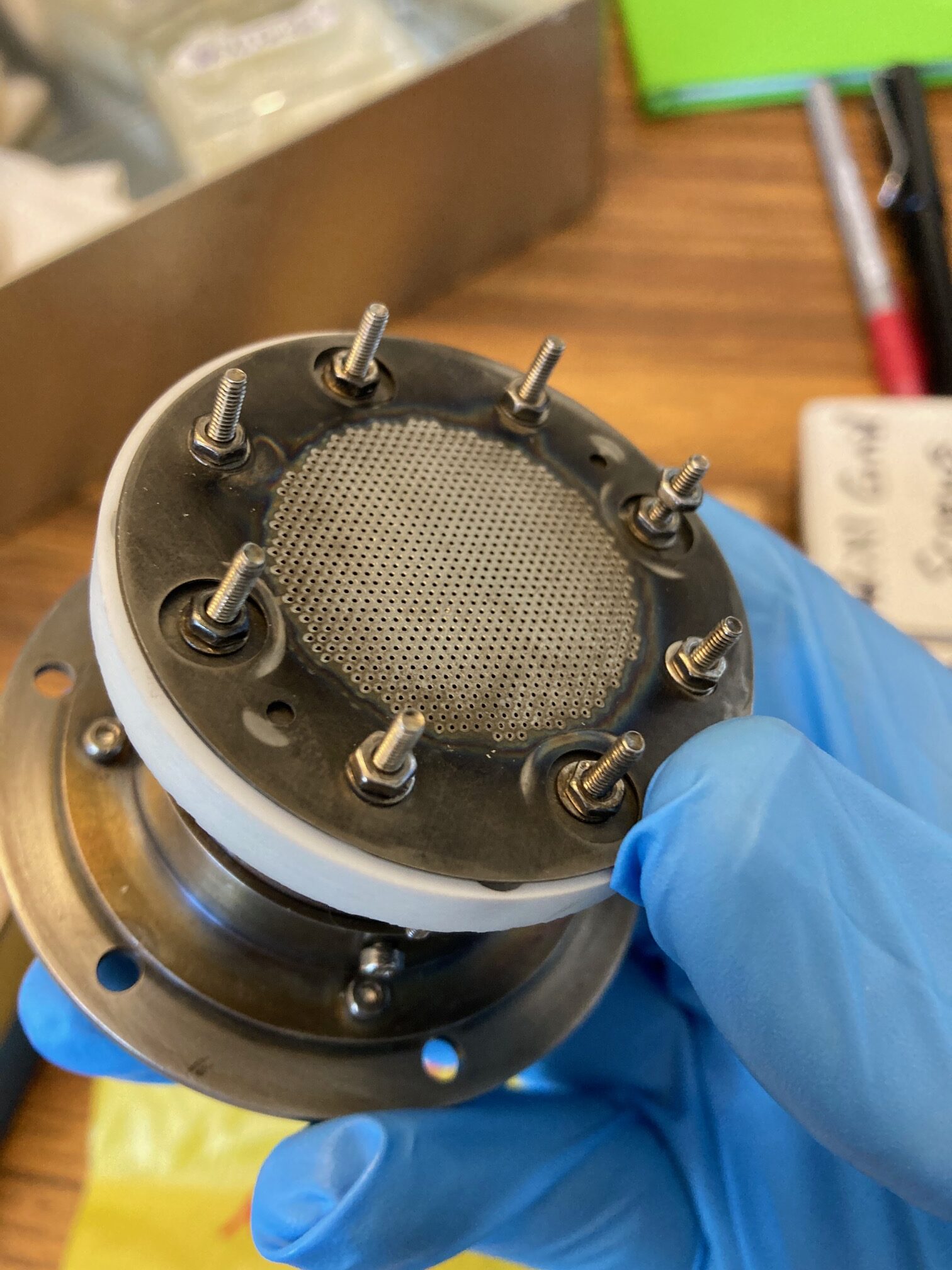
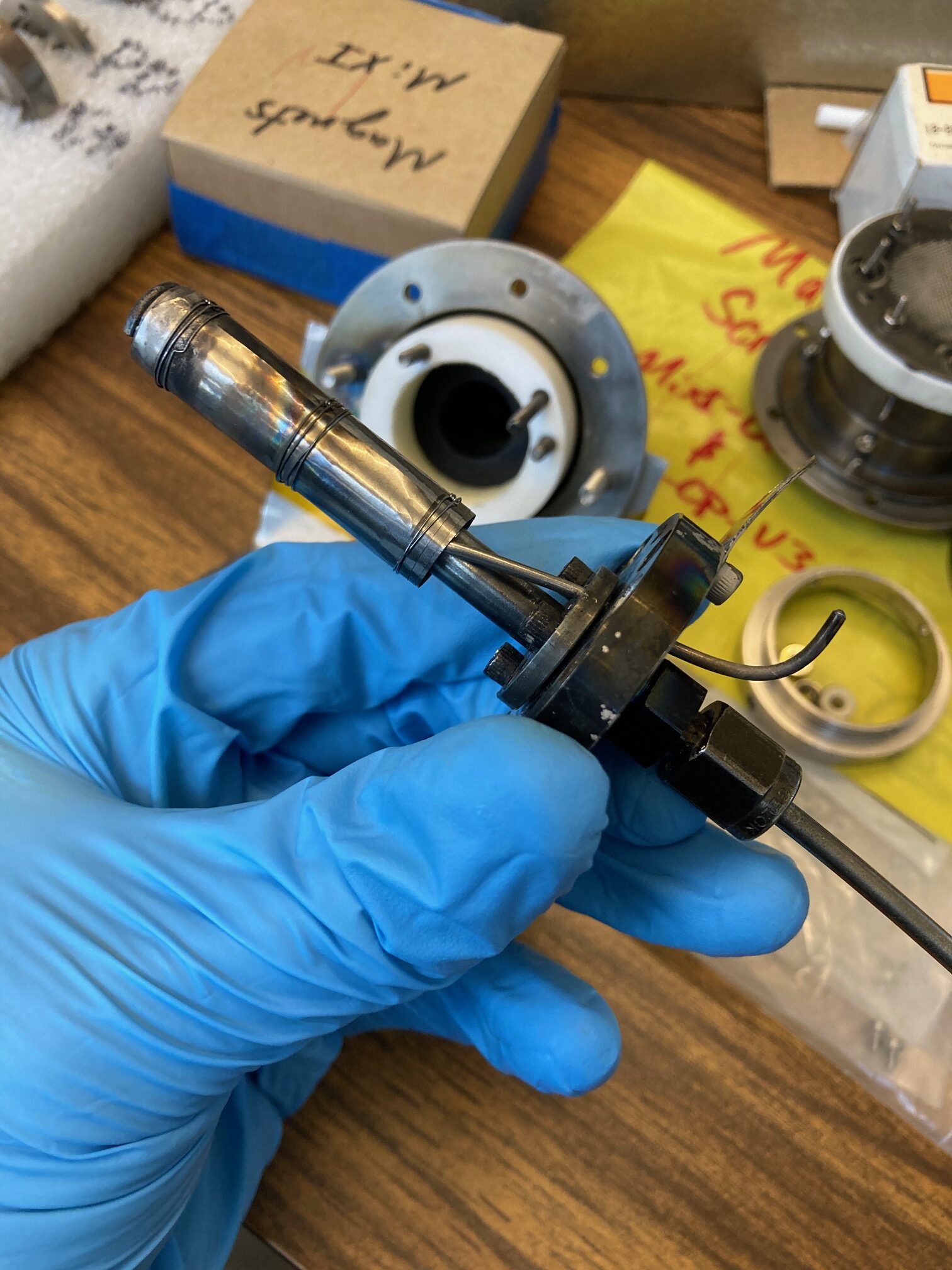
Besides this, PEPPR students also worked on inventorying various other plasma thrusters left behind by other former students. We located two different gridded ion thrusters (GITs), a hollow cathode (HC, Figure 7), an electrospray (ES), a High Efficiency Multistage Plasma Thruster (HEMPT), and a pulsed plasma thruster (PPT). Testing of these devices will continue through 2026. Students will also start designing a Hall effect thruster (HET), and will ideally get to run a loaned SPT-100 as a pathfinder. Additionally, I was awarded a small California Space Grant Consortium (CASGC) grant on cleaning solutions for lunar habitats. Stay tuned, more details to come soon.
As far as teaching goes, Cal Poly is still on quarters, but will be switching to semesters starting Fall 2026. In the Fall 2025 quarter, I taught three sections of a 300-level lab in which students learn about programming Arduinos and using them for data collection. In the Winter 2026 quarter, I will be teaching a class on Plasmas in Aerospace, which has not been taught since Prof. Greig’s departure 2020, along with a section of the space environments lab. Then in Spring 2026, I will be teaching several sections of a numerical methods class. All these classes will get re-arranged once we move to semesters.
PIC-C Blog
So where does this leave PIC-C, or at least this blog? The company is not going anywhere, although I had to reduce my consulting support due to the need to prioritize the university work. However, this new expanded focus onto academia also means that I should have more time for writing articles and general code improvements. I am currently in the process of incorporating adaptive mesh refinement into Starfish, with a companion tutorial article coming out soon.