Plasma Physics and Scientific Computing Blog
Our blog features regular articles on numerical methods for plasma and rarefied gas simulations, as well as general updates related to plasma propulsion and spacecraft contamination control. Subscribe to the newsletter to avoid missing any articles.
[newsletter-signup]
-
Filter by category:
- Apps
- Contamination
- Embedded Systems
- Field Solvers
- Interactive
- Mesh Generation
- News
- Numerical Methods
- Papers and Codes
- Plasma Simulation
- Starfish
- Surface Interactions
- Uncategorized
- Visualization
2025 Year in Review
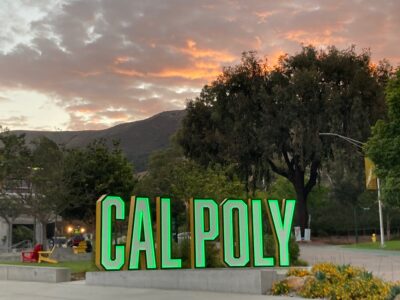
Year 2025 saw me transition into a full time Aerospace Engineering faculty role at Cal Poly, SLO. See the article to learn more about my future activities. (Jan 2 2026)
2024 SCTC and IEPC Debrief
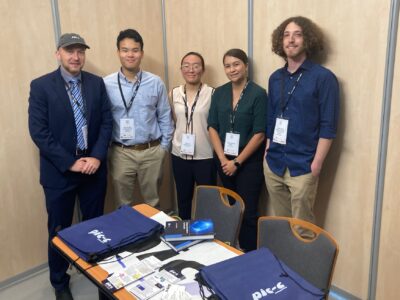
I spent the last two weeks of June 2024 in southern France attending two back-to-back technical conferences: SCTC and IEPC. This post is a brief debrief and a summary of the presented research. (Aug 27 2024)
Development of a Solid Fuel Adamantane Ion Thruster
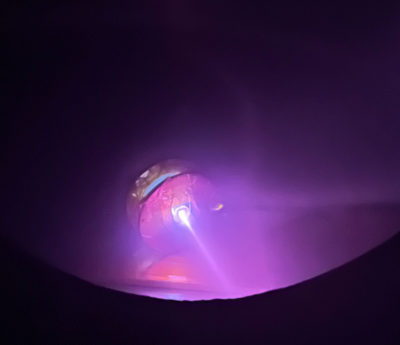
This post summarizes current work by the USC undergraduate student club ASPEN to develop a solid fuel plasma thruster operating on Adamantane. (Dec 27 2023)
Dust Dynamics at Mesoscale Resolution
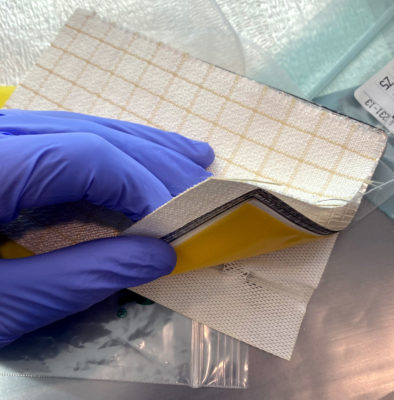
We report on an ongoing project to simulate lunar regolith adhesion to spacesuits and study its removal due to mechanical actions, compressed air application, and exposure to plasma. High speed videos are also provided. (Dec 27 2023)
Experimental investigation of QCM-derived sticking coefficients
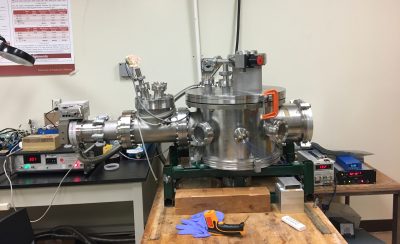
In this post we describe a campaign at USC Dept of Astronautical Engineering and at Blue Origin in Kent, WA to determine whether experimentally derived temperature varying sticking coefficients can be used to model gray-body contaminant mass transport. As expected, the answer was found to be no. These results were presented at the 2022 SPIE Optics and Photonics conference. (Dec 26 2023)
JWST Contamination Deposition Analysis
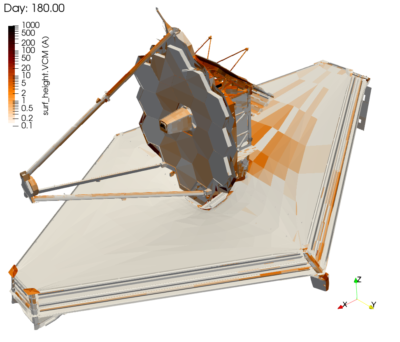
This article briefly describes recent work of analyzing water ice and molecular contaminant deposition during the 180 day commissioning phase of the James Webb Space Telescope (JWST). More details can be found in our 2022 SPIE Optics & Photonics paper. (Dec 25 2023)
CAD Based Particle Simulation Code
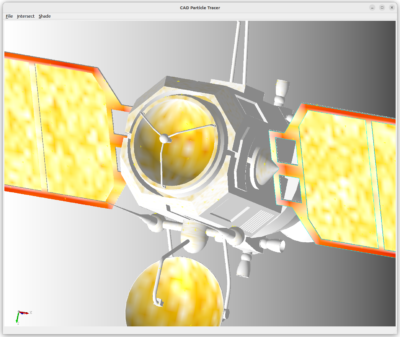
We demonstrated as part of a NASA SBIR effort the ability to run particle simulations directly with CAD geometries. Such a mesh-less approach is expected to lead to massive reductions in labor cost and the ability to rerun simulations whenever the design changes. (Dec 25 2023)
Quasi Steady-State Testing Approach for High Power Hall Thrusters
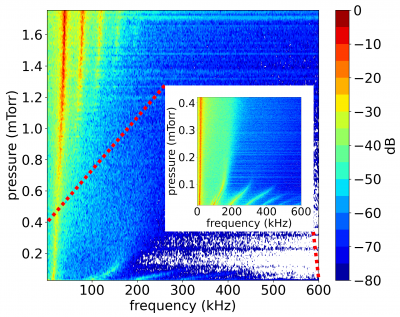
In the late 2021, I, along with Drs. Yevgeny Raitses, Edgar Choueiri, Roger Myers, and Prof. Michael Keidar published a paper in Journal of Applied Physics special issue on electric propulsion on a concept of testing high-power Hall thrusters using a pulse operation (doi:10.1063/5.0067232). This work involved performing numerical simulations with a modified version of […] (Oct 26 2021)
2020 Papers
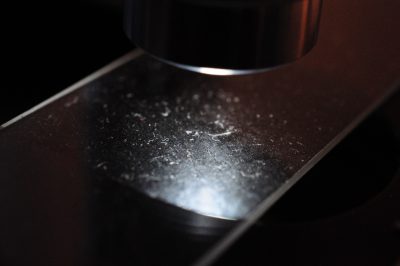
The purpose of this post is to summarize papers published, or at least drafted, in 2020. Published Zolotukhin, Daniels, Brieda, Keidar, “Onset of the magnetized arc and its effect on the momentum of a low-power two-stage pulsed magneto-plasma-dynamic thruster”, AIP Phys. Rev. E This paper, mainly written by D. Zolotukhin, presented very interesting experimental results […] (Sep 15 2020)
Particulate Surface Adhesion Sandbox
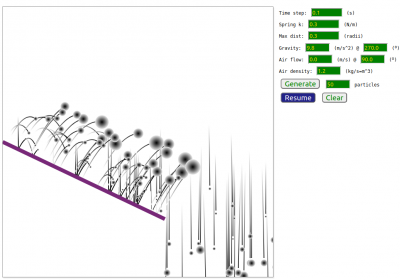
(TL/DR: This page contains an interactive Javascript sandbox for testing surface adhesion. You can play with it below or in a separate window by clicking here) One of the projects I am currently working on involves modeling the gas-surface or plasma-surface interface. This has dual applications. First, in the world of contamination control, it is […] (Sep 8 2020)
Setting up an Ubuntu Linux Cluster
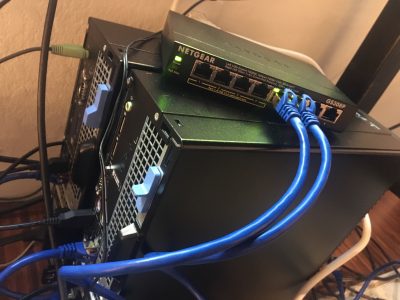
Step-by-step tutorial for setting up an MPI Ubuntu cluster with network file system to be used for parallel distributed computing (Sep 7 2020)
Interconnected Spheres Javascript Demo
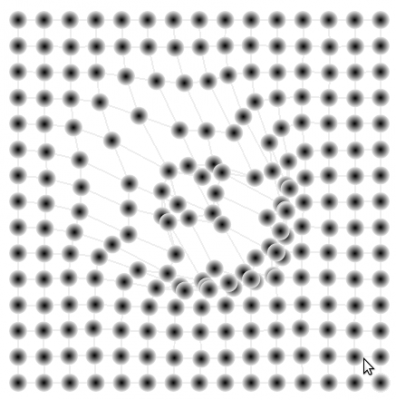
Tutorial for creating a Javascript simulation of a "crystal-lattice" formed by interconnected spheres interacting with the spring force (Sep 7 2020)
Introduction to Modern Scientific Programming and Numerical Methods

Table of contents for the upcoming "Introduction to Modern Scientific Programming and Numerical Methods" by Brieda, Wang, and Martin. Leave us a comment with your suggestions and let us know if you would like to help with the reviews. (Sep 6 2020)
Arduino Plasma Simulation
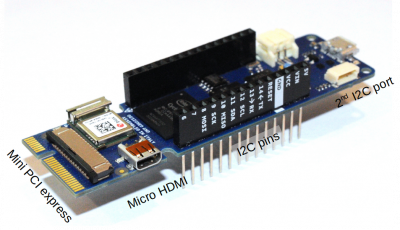
An example electrostatic particle-in-cell simulation was developed that runs on the Arduino microcontroller. Field results are visualized over serial port using Python. (May 27 2020)
USC ASTE-499 Applied Scientific Computing Debrief
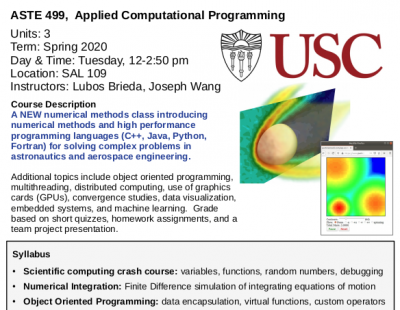
In the spring semester 2020, I had the opportunity to teach an Applied Scientific Computing course at USC. Here is a course summary and a debrief. (May 25 2020)
Effect of Ion Thruster Plume-Thermosphere Interaction on Satellite Aerodynamics in Very Low Earth Orbit
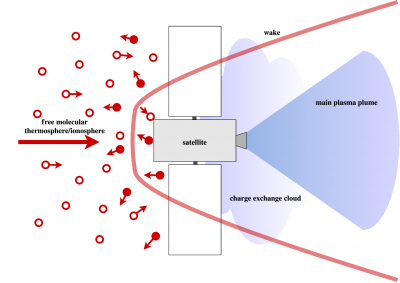
Satellite operations in Very Low Earth Orbit (VLEO), altitudes below 250km, are highly appealing for flexible, high-performing and economical spacecraft operations to deliver low-cost communications and Earth observation data. However, the mission lifetime in VLEO is significantly limited due to the aerodynamic drag from the momentum exchange between the residual atmosphere and satellite. This article describes a recent research of S. Andrews that utilized our Starfish plasma simulation code. (May 25 2020)
Computing pi with CPUs, GPUs, threads, MPI, Javascript, Arduino, and FPGAs
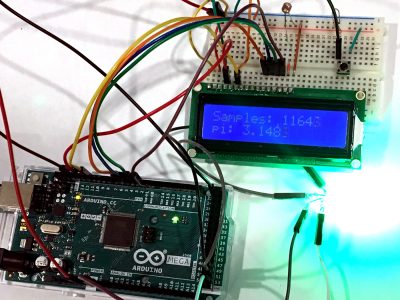
This year, for “pi day” (March 14th), I figured I’ll post a short article demonstrating how to estimate the value of π using different computer architectures. This topic is somewhat in line with the ASTE-499 Applied Scientific Computing Course I am currently teaching at USC’s Astronautical Engineering Department. The goal of that course is to […] (Mar 14 2020)
Introduction to Vlasov Solvers
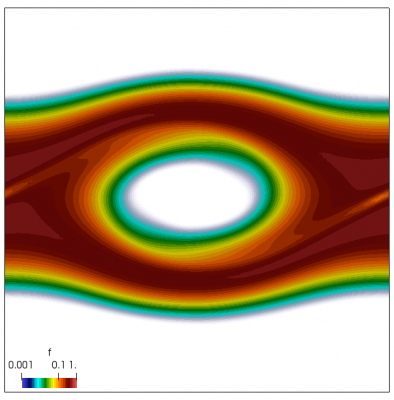
A simple 1D-1V Vlasov code for two-stream instability is developed. The code is based on a splitting scheme proposed by Cheng and Knorr in 1975. (Sep 11 2018)
Multigrid Solver
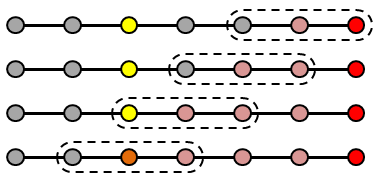
The Multigrid scheme for accelerating convergence of iterative matrix solvers is explained and demonstrated with a one-dimensional Python code. (Mar 11 2018)